

Puma Case: Analysis of the risk of confusion for simple graphic
marks. Inverse relationship between ius prohibendi and the level of
complexity of a trademark
The legal monopoly conferred through trademark registration is not unlimited; it varies substantially depending on, among other elements, the type of sign in question and specifically, how complex or simple the sign is.
The recent judgment of the General Court of the European Union of 21 January 2026 (case T-43/25) is a very good example of this issue.
The dispute was between Puma and a Chinese company that had applied for a trademark registration of the following sign for products in class 25:

For its part, Puma opposed the registration by referring to its well-known “formstripe” brands:
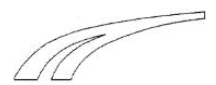
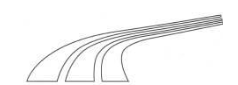
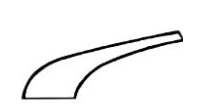
The General Court upheld the decision of the Board of Appeal of EUIPO and dismissed the opposition in its entirety. It concluded that, even though the goods are identical, the marks are not sufficiently similar, this especially when taking into account the relatively simple nature of the marks and the differences they present.
The judgment reinforces an essential principle of trademark law: the similarity between goods cannot compensate for the lack of similarity between the signs. If the marks are not sufficiently similar, there can be no likelihood of confusion.
Moreover, for purely figurative signs the analysis is fundamentally visual. There are no phonetic or conceptual elements that may influence the comparison. In this context, when simple forms or limited distinctiveness are involved, even subtle differences can be decisive.
Especially interesting are the arguments employed by Puma given that these were dismissed in both trials:
First of all, they argued that the sign could be perceived differently on the market depending on how it is affixed to a product. The Court rejected this argument outright: in opposition proceedings, signs must be compared as they are registered, not in light of hypothetical uses.
Secondly, the argument based on the existence of a family of trademarks owned by the applicant also fails. The visual identity established by such a family with regard to visual trademarks, such as the ones in question, does not allow protection to be extended to any sign that uses similar elements when there is no sufficient similarity.
Beyond this specific case, the decision reflects a recurring tension in trademark law. The more a trademark relies on simple visual elements, the more limited is the scope of its protection. To allow otherwise would unduly restrict competition, especially in sectors such as fashion or sports, where visual language tends to be essentially basic.

Copyright © 2026 All rights reserved